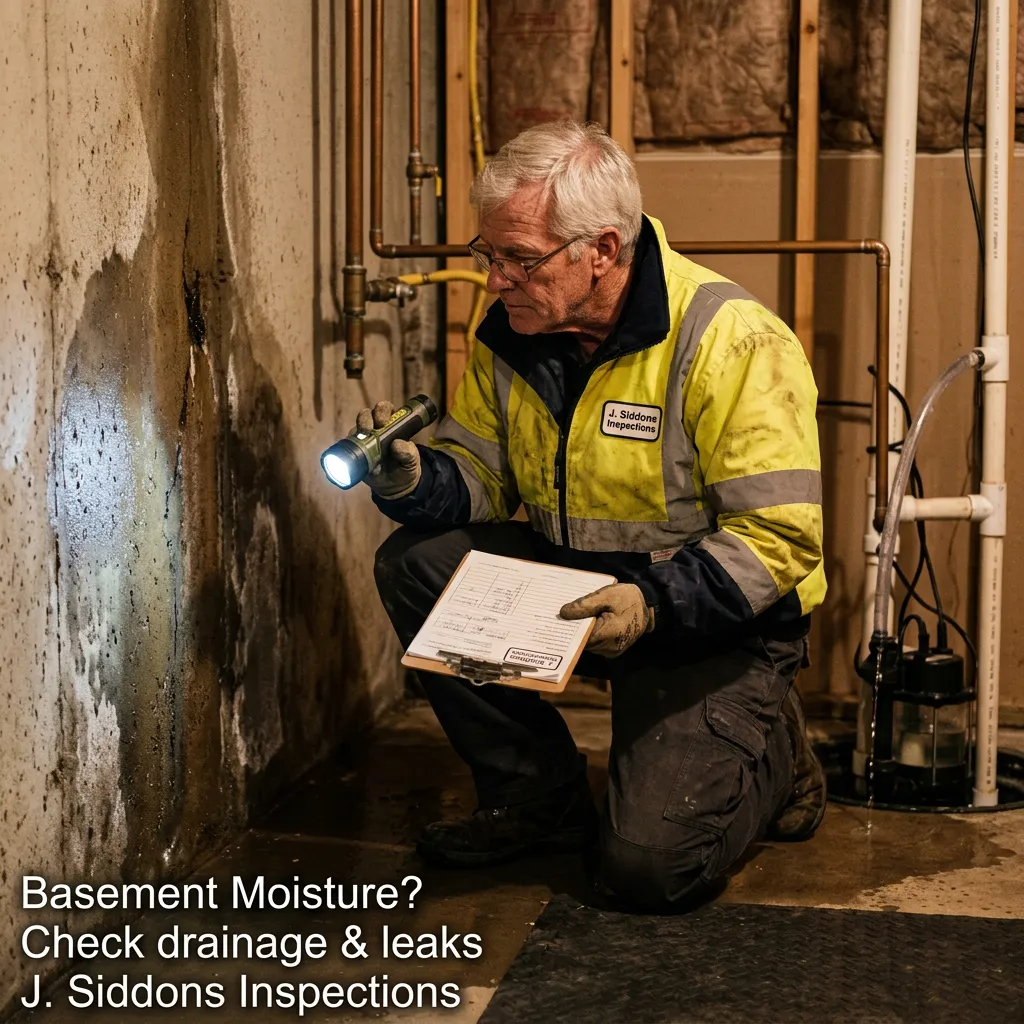
Basement Moisture: Where Is That Water Coming From?
Basement Moisture: Where Is That Water Coming From?
J Siddons Home Inspections | Fall Into Winter Series — Early November
A damp basement can raise a lot of questions for homeowners and homebuyers. Is that moisture coming through the foundation? Is there a plumbing leak? Is the basement simply too humid? Or is water collecting around the outside of the house?
As we move from fall into winter, changing temperatures, seasonal rain, fallen leaves, and drainage conditions can reveal moisture problems that were not obvious during the warmer months.
At J Siddons Home Inspections, I believe understanding the source of a problem is far more valuable than simply reacting to the symptom.
Knowledge empowers confidence.
Not All Basement Moisture Comes From the Same Place
Finding water in a basement does not automatically mean there is a major foundation problem. Several different conditions can produce similar symptoms.
1. Poor Exterior Drainage
One of the first places to investigate is outside the home.
When gutters overflow, downspouts discharge too close to the foundation, or the ground slopes toward the house, rainwater may collect alongside basement walls.
Over time, this can contribute to moisture intrusion.
Warning signs include:
Water stains near the bottom of basement walls
Dampness following heavy rain
Pooling water around the foundation
Erosion beneath downspouts
Gutters filled with leaves or debris
Homeowner tip: Check that gutters are clear, downspouts direct water away from the foundation, and surface drainage moves away from the house. Extensions and drainage improvements should be designed for the property's conditions.
2. Foundation Cracks and Seepage
Concrete and masonry foundations can develop cracks for several reasons, including shrinkage, movement, and settlement.
Not every crack indicates a serious structural issue. However, cracks can sometimes create pathways for water.
Look for:
Damp areas along cracks
Mineral deposits or white powdery residue (efflorescence)
Discoloration or staining
Water entering after storms
Cracks that appear to widen or show displacement
A home inspection can document visible conditions and recommend further evaluation when warranted.
Important: A crack's appearance alone does not establish its cause or severity. Significant movement, displacement, or recurring seepage should be evaluated by a qualified professional.
3. Condensation and High Humidity
Sometimes the moisture is not coming through the foundation at all.
Warm, humid indoor air can condense on cooler basement surfaces, including pipes, walls, and floors.
This can create a damp environment even without active water intrusion.
Common signs:
Moisture on cold water pipes
A persistent musty odor
Damp surfaces during humid weather
Condensation on windows
Elevated indoor humidity
A hygrometer can help homeowners monitor humidity levels. In many basements, maintaining relative humidity around 30–50% is a useful target, provided it does not create condensation on cold surfaces.
Dehumidification and appropriate ventilation can help manage humidity, but they will not correct an active water leak.
4. Plumbing Leaks
Not all basement water comes from outside.
Supply lines, drainpipes, fixtures, water heaters, and other plumbing components can leak.
Possible warning signs include:
Moisture beneath plumbing connections
Dripping pipes
Staining below fixtures
Water around a water heater
Dampness that occurs regardless of rainfall
A qualified plumber should evaluate suspected plumbing leaks.
5. Groundwater and Hydrostatic Pressure
In some homes, groundwater can build up around or beneath the foundation.
This pressure may contribute to water entering through joints, cracks, or other openings.
Signs can include recurring water at the floor-to-wall joint, seepage through basement floors, or problems that return during prolonged wet weather.
Depending on the cause, correction may involve exterior drainage improvements, a sump system, or specialized waterproofing work.
There is no single solution that works for every basement.
Why Basement Moisture Shouldn't Be Ignored
Recurring dampness can affect more than the appearance of a basement.
Over time, persistent moisture may contribute to:
Damage to finished walls, flooring, and stored belongings
Deterioration of certain building materials
Mold growth where conditions support it
Corrosion of metal components
Reduced usability of basement spaces
Visible mold or persistent musty odors deserve attention, but mold testing and moisture-source evaluation are different services. The priority is identifying and correcting the moisture condition.
What Homeowners Can Check This November
Before winter arrives, take a few minutes to examine your basement and the exterior drainage around your home.
Your fall moisture checklist:
Clear leaves and debris from gutters
Check downspouts and extensions
Look for pooling water near the foundation
Inspect accessible basement walls and floors for staining
Check visible plumbing for leaks
Monitor basement humidity
Look for new cracks or changes to existing ones
Investigate recurring musty odors
Keep stored belongings away from damp surfaces
Document when and where moisture appears
A helpful practice is to note whether dampness occurs after rain, during humid weather, or continuously. That pattern can provide important clues.
What a Home Inspection Can Tell You
During a home inspection, I look for visible conditions that may indicate moisture intrusion or water-related concerns.
Depending on accessibility and conditions, this may include:
Visible foundation cracks and staining
Evidence of previous or active moisture
Accessible gutters and drainage conditions
Visible plumbing concerns
Moisture readings where appropriate
Conditions that may warrant specialist evaluation
A standard home inspection is a visual assessment, not an invasive waterproofing investigation. It cannot guarantee that hidden or intermittent leaks will be detected or determine every underground drainage condition.
When concerns are identified, I explain what was observed, why it matters, and what next steps may be appropriate.
A Note for Realtors
Basement moisture is a common concern during real estate transactions.
Water stains or efflorescence do not automatically mean a property has a major structural problem. However, these conditions should not be dismissed without appropriate evaluation.
Understanding whether a concern relates to humidity, drainage, plumbing, or possible foundation seepage can help buyers ask better questions and make more informed decisions.
My approach is simple: No scare tactics. Just clear, honest information.
Frequently Asked Questions
Does a musty basement always mean there is mold?
No. A musty odor can indicate persistent moisture or microbial activity, but an odor alone does not establish the presence, extent, or type of mold. Investigation may be appropriate.
Is white powder on basement walls a sign of water?
It may be efflorescence, a mineral deposit left behind as moisture moves through masonry and evaporates. It is evidence of moisture movement, but it does not by itself establish an active leak.
Can a dehumidifier fix basement water problems?
A dehumidifier can help manage airborne humidity. It will not repair plumbing leaks, exterior drainage problems, or groundwater intrusion.
Are basement cracks always serious?
No. Some cracks are relatively minor, while others warrant evaluation for structural movement or water entry. Location, width, displacement, changes over time, and associated conditions all matter.
Should I test for mold if my basement is damp?
Mold testing may be useful in some situations, particularly when the extent or nature of suspected contamination is unclear. Correcting the moisture source remains essential.
Can a home inspection guarantee the basement is waterproof?
No. A visual inspection documents accessible conditions observed at the time. Hidden or intermittent water intrusion may not be evident.
The Bottom Line
Water in the basement is not something to ignore—but it is also not a reason to jump immediately to the worst conclusion.
The key is understanding what is happening, why it may be happening, and what appropriate next steps look like.
At J Siddons Home Inspections, I help buyers, sellers, and homeowners understand their homes so they can move forward with confidence.
Knowledge empowers confidence.
J Siddons Home Inspections
Serving New Jersey and parts of Pennsylvania
📞 908-295-0330
🌐 https://jsiddonshomeinspections.com
Home inspections | Radon testing | Mold testing | Sewer line camera inspections | Oil tank sweeps | Water testing

